





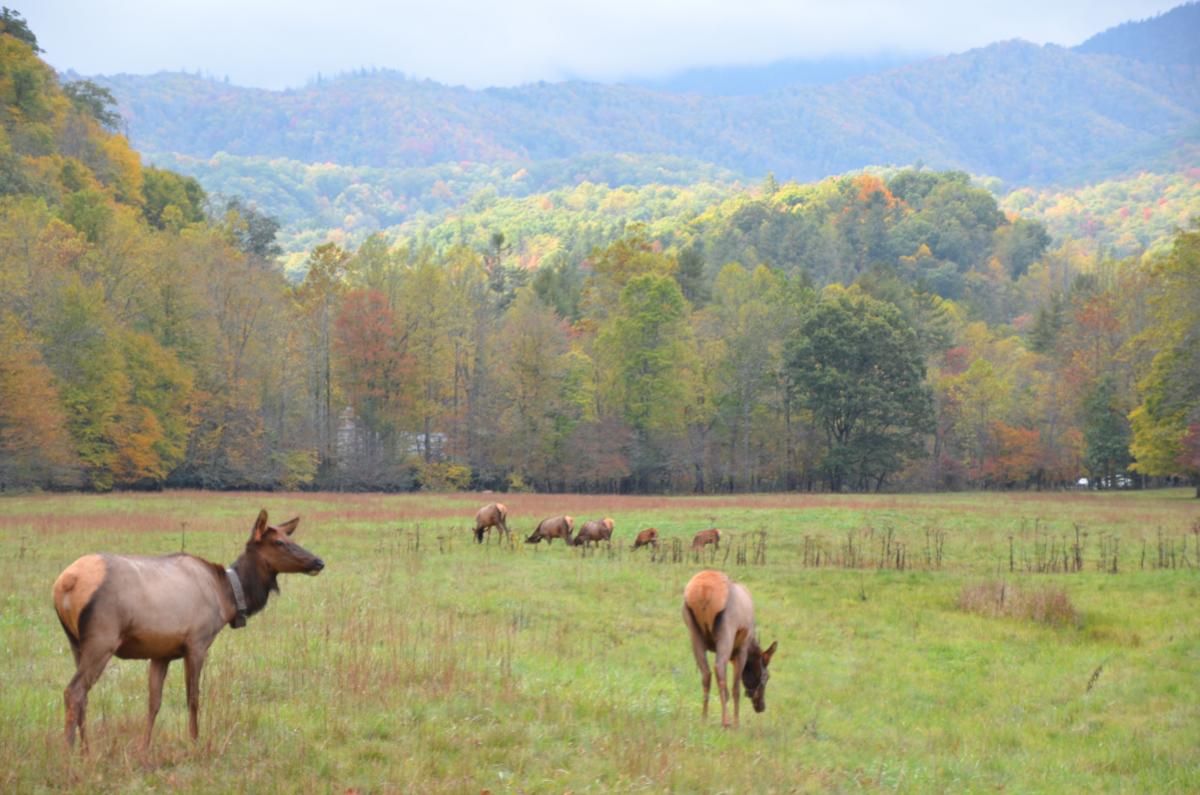
The best elk viewing in the Smokies happens on the North Carolina side of Great Smoky Mountains National Park, especially around Oconaluftee, Cataloochee and Balsam Mountain's Heintooga Road. These areas combine open meadows, forest edges, and roadside viewing opportunities where visitors may see elk feeding, resting, or moving between habitats. Plan for early morning or late evening, bring binoculars, and give every animal far more space than you think it needs.
Where are the best places to see elk in the Smokies?
The top places for elk watching in Great Smoky Mountains National Park are the Oconaluftee area near Cherokee and Bryson City, Cataloochee Valley, and Balsam Mountain's Heintooga Road. The National Park Service identifies these as notable viewing areas, with Cataloochee and Oconaluftee especially known for the park’s main elk herds. Elk are most active in the early morning and late evening, and they may also be visible on cloudy days.
Before you build your day around smoky mountains elk, remember that these are wild animals, not roadside attractions. The best experience comes from patience: park safely, stay quiet, scan the fields and tree lines, and let the moment unfold naturally. You may see a large bull with antlers, a group of cows grazing together, or only tracks and movement in the distance.
A smart elk-watching plan includes:
- Binoculars or a spotting scope so you can enjoy details without moving closer.
- A camera with a zoom lens rather than a phone-only setup that tempts you to approach.
- Layers and rain gear because mountain valleys can be cool, damp, and foggy.
- A flexible schedule since wildlife never appears on command.
- A quiet attitude that keeps the experience calm for both people and animals.
Oconaluftee offers easy access near Cherokee
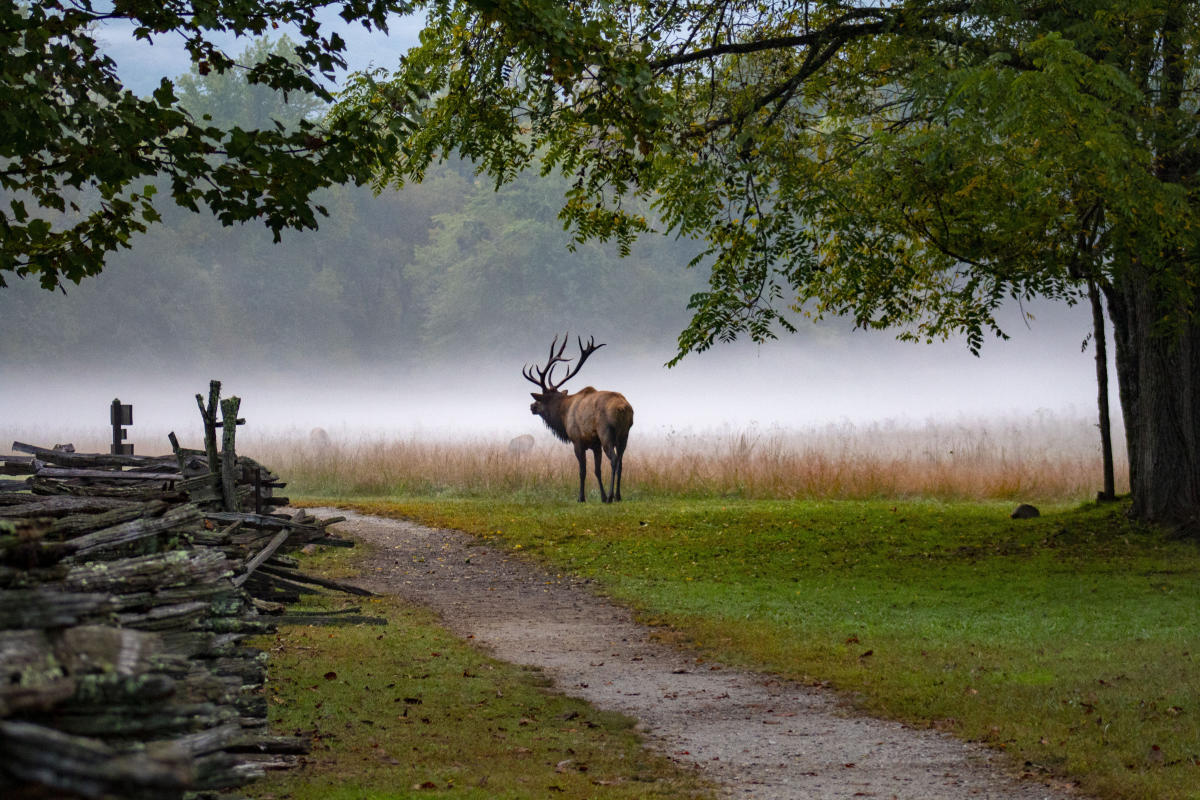
The Oconaluftee area is one of the most convenient spots for elk watching in the Smokies, particularly for visitors staying near Bryson City and Cherokee, North Carolina, or driving Newfound Gap Road. The National Park Service describes this large river valley as home to one of the park’s two main elk herds, and the porch at Oconaluftee Visitor Center can be a good place to watch from a safe distance.
This area works well for families, first-time visitors, and travelers who want to pair smoky mountains wildlife viewing with an easy stop. The visitor center, nearby open fields, and Mountain Farm Museum area create a practical base for looking across the valley without wandering into closed or sensitive areas.
Oconaluftee can also be busier than Cataloochee because it sits near major roads and popular park entrances. That does not make it less worthwhile, but it does mean you should be extra careful about traffic. If you see elk from your vehicle, use a designated pull-off and make sure your car is completely out of the roadway, as the park advises.
For a smoother visit, treat Oconaluftee as a relaxed wildlife stop rather than a quick photo mission. Spend time looking at the edges of the fields, the river corridor, and shaded areas where elk may linger. If the animals are far away, that is a successful sighting, not a reason to move closer.
Cataloochee Valley is a classic elk-watching destination
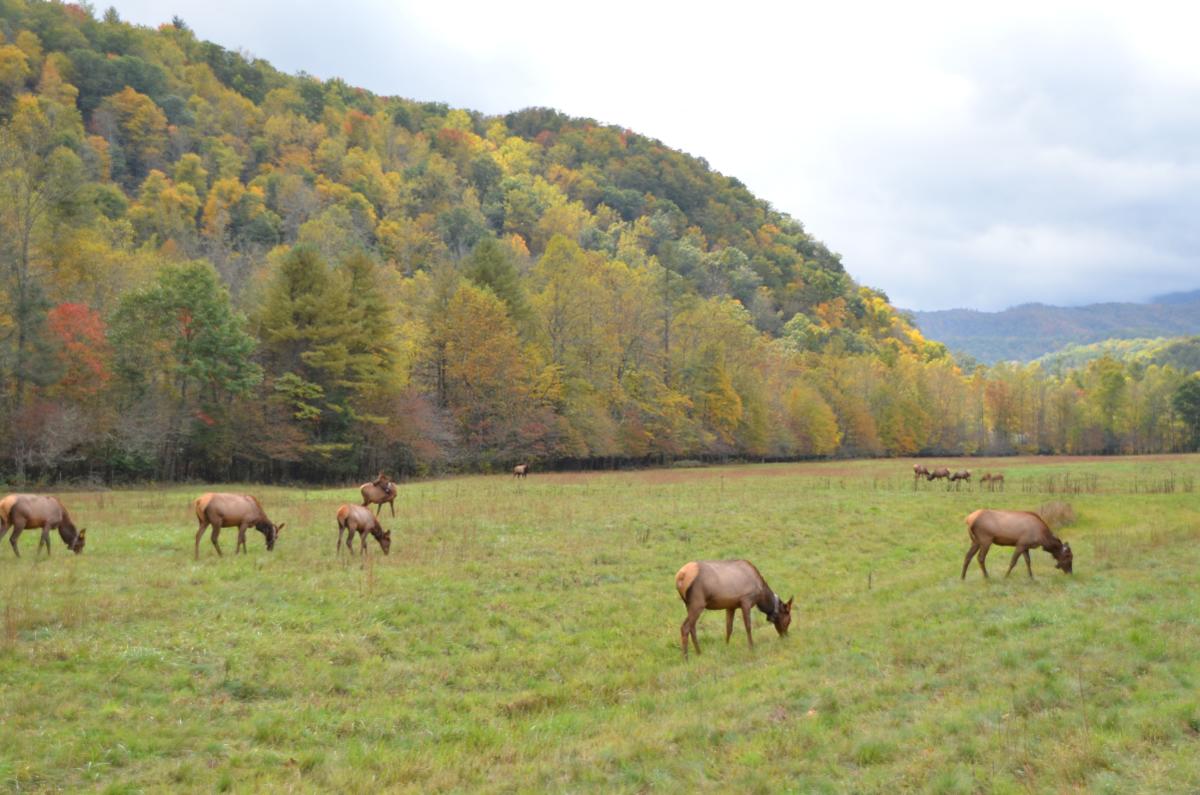
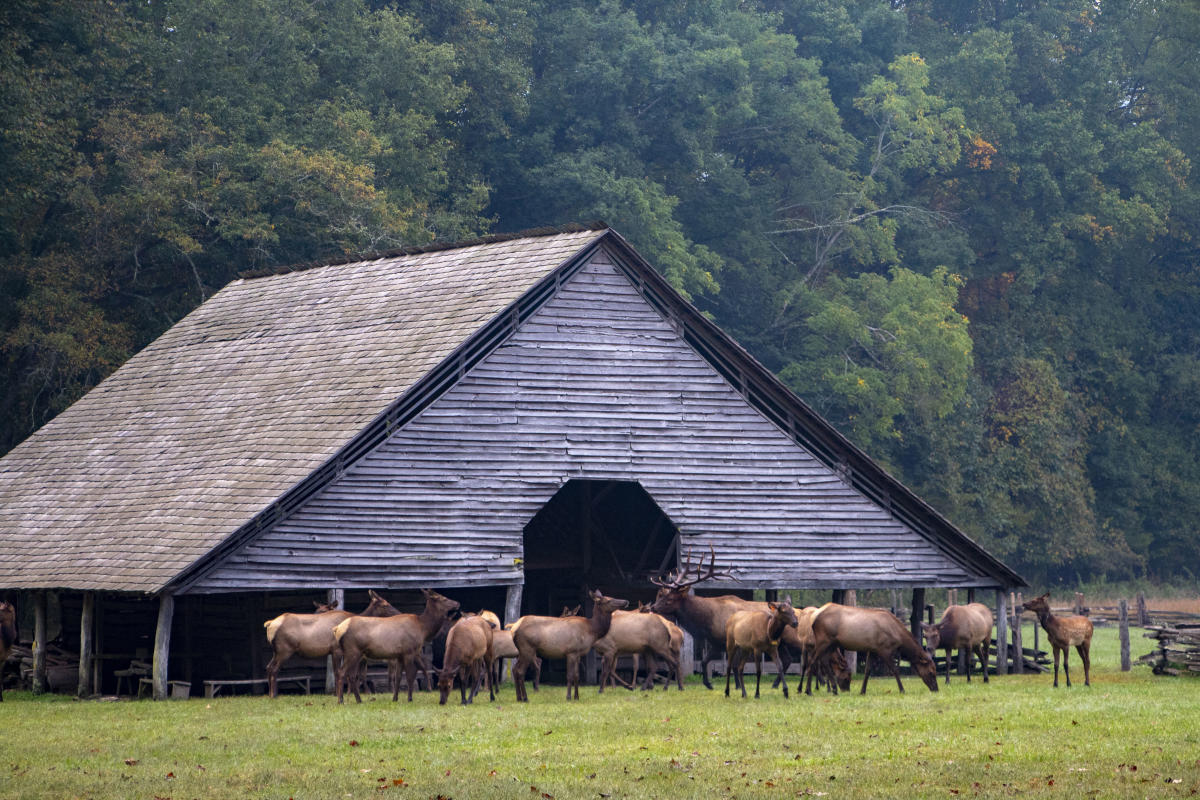
Cataloochee Valley is often the first place travelers think of when planning elk watching Great Smoky Mountains trips. Tucked into a remote section of the park, the valley has broad grassy openings bordered by wooded slopes, which makes it easier to scan for elk from safe roadside areas. It is also one of the park’s two main elk herd areas, making it a strong choice for visitors who are willing to take a slower, more scenic drive.
The appeal of Cataloochee is not only the wildlife. Historic structures, mountain views, and a quieter atmosphere give the valley a sense of stepping back in time. If elk do appear, the setting often feels more natural and less rushed than busier roadside stops.
Go early if you can. Morning light can be beautiful in the valley, and arriving before peak visitor traffic makes it easier to find a legal pull-off and watch without blocking the road. Evening can be just as rewarding, but give yourself enough daylight to drive out carefully on narrow, winding roads.
When viewing elk in Cataloochee:
- Stay near the roadside or designated viewing areas.
- Do not walk into fields for a better angle.
- Keep conversations low and movement slow.
- Expect rangers or volunteers to manage crowds during sensitive seasons.
- Watch for elk crossing roads, especially near dawn and dusk.
Balsam Mountain rewards patient wildlife watchers
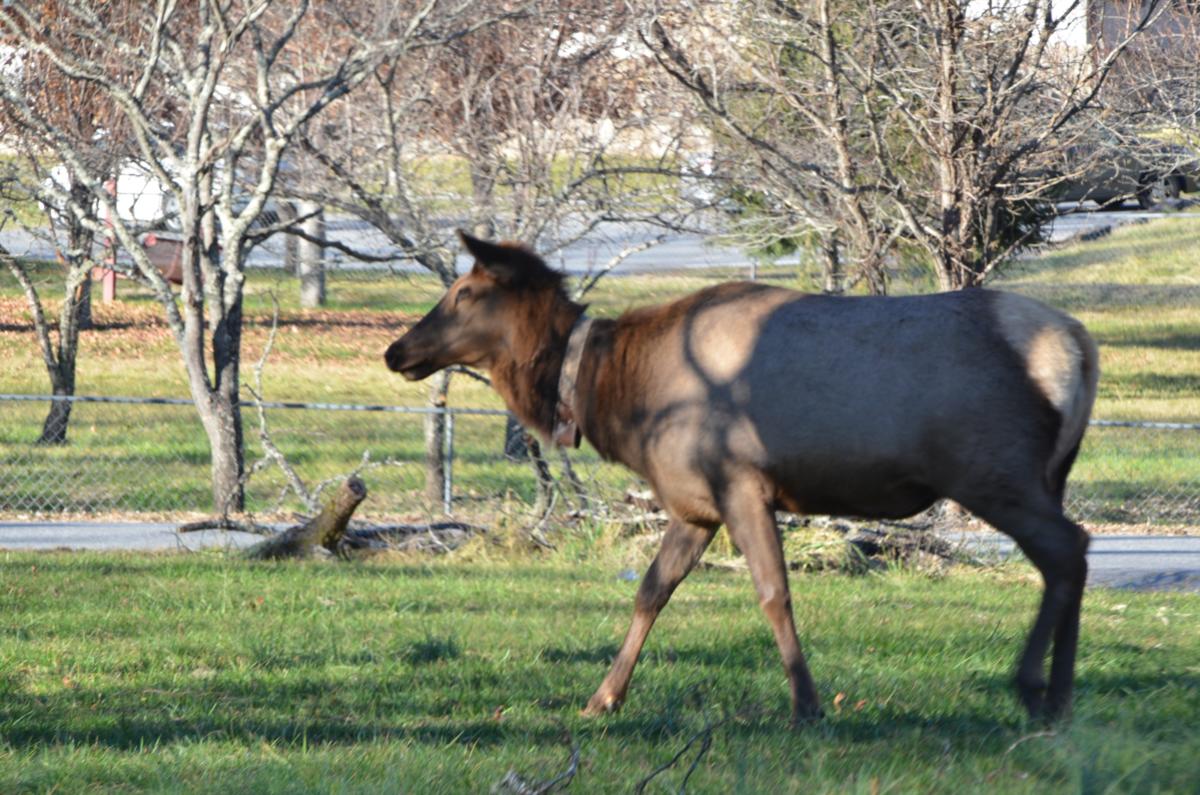
Balsam Mountain's Heintooga Road Spur is another notable area for Smoky Mountains elk, especially for visitors who prefer a quieter, higher-elevation experience. The National Park Service includes Balsam Mountain among the park’s elk viewing locations, and elk may be seen moving through or near road corridors in this broader area.
This is not always the easiest place for a guaranteed sighting, but that is part of its charm. Balsam Mountain feels more like slow exploration than a single overlook. The habitat shifts, the roads climb, and the views can open suddenly between forested stretches.
Because conditions and access can vary by season, check the park’s current road information before making Balsam Mountain the centerpiece of your day. If roads are open and weather is cooperative, give yourself time to move slowly, use pull-offs responsibly, and watch for elk without creating unsafe stops.
When should you plan an elk-watching trip?
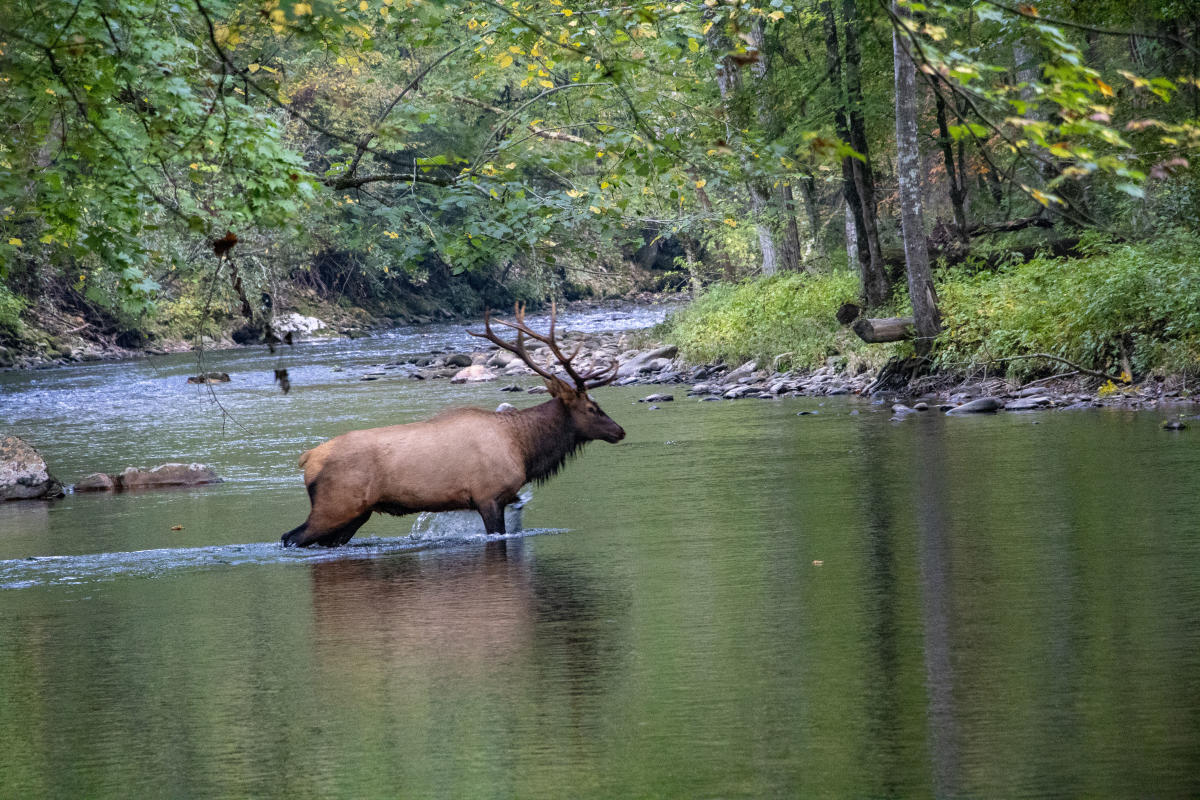
The best daily windows for elk watching Great Smoky Mountains visits are early morning and late evening, when elk are typically more active. Cloudy days can also improve your chances because cooler, softer conditions may encourage animals to remain visible longer.
Season matters, too. Spring and early summer can bring calving-related closures and extra sensitivity around young animals. Fall is rut season, when bull elk may bugle and compete for attention, but it is also a time when males can be especially unpredictable. The park has noted field closures in Cataloochee and parts of the Oconaluftee area during May and June for calving season and September and October for rut season, so visitors should respect signs, barriers, and ranger instructions.
A practical seasonal approach looks like this:
- Spring: Watch from roadsides and never approach calves. A calf lying alone is not necessarily abandoned.
- Summer: Choose cooler morning or evening hours and expect heat, insects, and afternoon storms.
- Fall: Enjoy the possibility of bugling from a safe distance, but give bulls extra room.
- Winter: Sightings may feel quieter and less predictable, but bare trees can make long-distance viewing easier.
Safe viewing protects both visitors and elk
Responsible elk tours Smoky Mountains visitors book or plan on their own should always put safety first. The National Park Service advises visitors to maintain distance from elk, avoid entering fields, use binoculars or telephoto lenses, and never feed wildlife. Approaching elk too closely, disturbing them, or causing them to change behavior can be illegal and dangerous. (nps.gov)
Elk are large, powerful animals. Cows can be defensive around calves, and bulls can be aggressive during the rut. Even an elk that appears calm can react quickly if it feels crowded.
Use this simple field checklist:
- Keep a generous distance; when in doubt, back up.
- Stay in or near your vehicle when elk are close to the road.
- Never feed, call, whistle at, or try to lure elk.
- Keep children beside you and pets secured where pets are allowed.
- Obey closures, cones, signs, and volunteer guidance.
- Leave antlers, bones, and all natural objects where they are.
- If an elk approaches, calmly move away rather than standing your ground.
Good manners also matter. Do not block lanes, stop suddenly, or crowd other viewers. A respectful roadside scene lets everyone enjoy the wildlife without turning the moment into a traffic hazard.
Guided elk tours can simplify the experience
Elk tours Smoky Mountains travelers consider can be helpful if they want local route planning, interpretation, and a more relaxed schedule. A good guide cannot guarantee wildlife, but they can explain elk behavior, choose appropriate viewing windows, and help guests understand park rules. This is especially useful for first-time visitors who do not know the difference between Cataloochee, Oconaluftee, and other wildlife areas.
If you choose a guided option, look for one that emphasizes ethical viewing. The right tour should keep guests at a safe distance, avoid crowding animals, and follow all park closures. Be cautious with any experience that promises close encounters or encourages behavior that would disturb wildlife.
Self-guided trips can be just as rewarding when you plan carefully. The key is to choose one primary area, arrive during a strong viewing window, and resist the urge to chase sightings from place to place.
A simple one-day elk-watching plan
If you have one day, start with the area that best fits your lodging and driving comfort. Visitors near Bryson City may prefer Oconaluftee because it is accessible and easy to combine with other park stops. Travelers looking for a quieter, more immersive outing may choose Cataloochee, while patient explorers can consider Balsam Mountain when conditions are favorable.
Here is a simple plan:
- Choose your main viewing area the night before. Check current road conditions, weather, and park alerts.
- Arrive around sunrise or return near sunset. Midday can still be scenic, but elk are often less active.
- Park only in legal pull-offs. If there is no safe place to stop, keep moving.
- Scan slowly. Look along field edges, shaded openings, and places where meadows meet woods.
- Stay flexible. If elk are not visible, enjoy the landscape, historic sites, and other smoky mountains wildlife.
The best elk-watching days are not always the ones with the closest animals. Often, the most memorable moments are quiet: fog lifting from a valley, a distant bugle, or a herd grazing peacefully while visitors watch with care.
The takeaway for elk watching in the Smokies
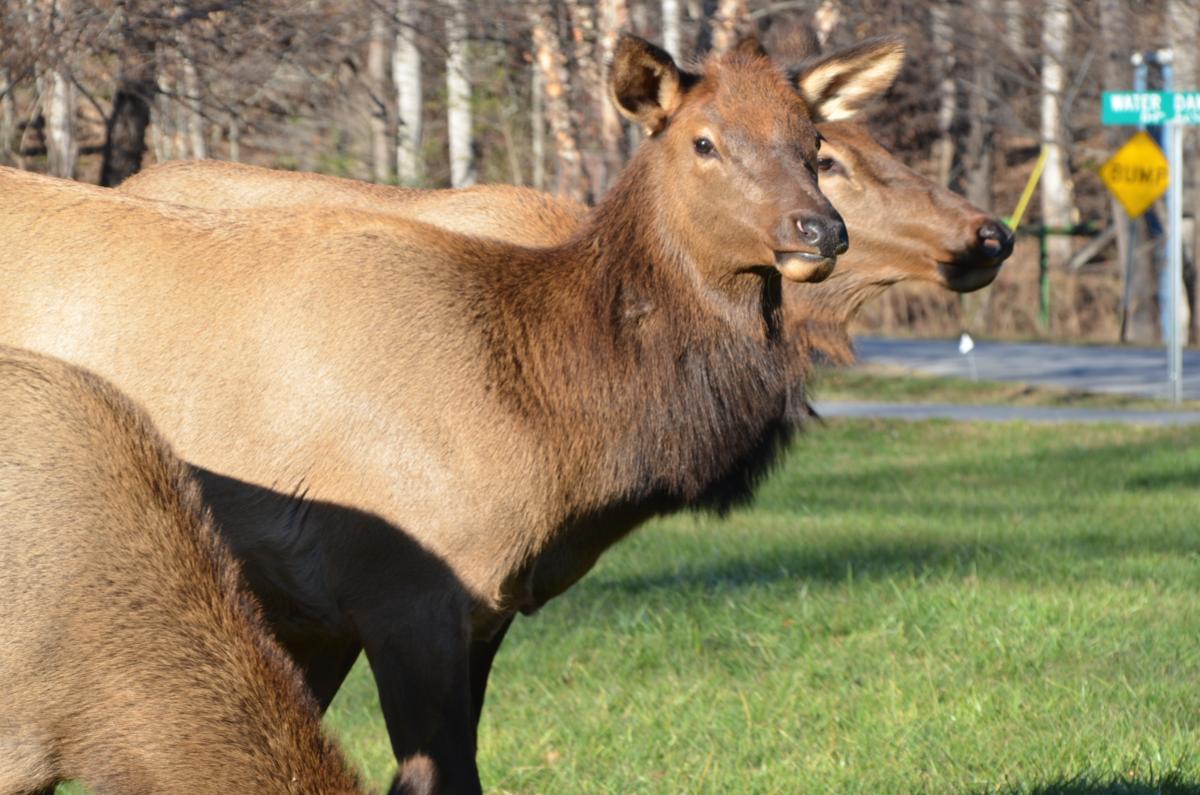
Elk watching in the Great Smoky Mountains is at its best when you combine good timing, smart locations, and respectful distance. Cataloochee Valley, Oconaluftee, and Balsam Mountain offer the strongest opportunities, especially in the early morning or late evening. Bring binoculars, follow park rules, and let the elk remain wild.
That approach gives you a better experience and helps protect one of the Smokies’ most impressive conservation stories. Whether you join a guided outing or plan your own route, patience and respect are the real keys to seeing smoky mountains elk the right way.